
How to Verify a Licensed Locksmith (And Avoid These 5 Common Scams)
Locksmith scams are among the most common home-service scams in the country. The FTC and Better Business Bureau receive thousands of complaints per year — and the pattern is almost always the same. This guide tells you exactly what to check before you hand over your address.
The 5 most common locksmith scams
1. The “$19 lockout” bait and switch
You search “locksmith near me,” you call the ad that promises $19 service, someone shows up in a plain car, they drill through a perfectly good lock that shouldn’t need to be drilled, and then bill you $380. The $19 was the “trip fee.” Everything else is extra. This accounts for roughly 60% of locksmith complaints nationwide.
2. The fake local storefront
A call center in another state operates hundreds of fake “Main Street Locksmith,” “Downtown Locksmith,” and “[Your City] Lock and Key” websites. When you call, you’re routed to a dispatch hub that sends the cheapest available subcontractor. They have no local accountability.
3. Cash-only pressure tactics
Legitimate locksmiths accept cards. Scammers insist on cash, claim their card reader is broken, or demand payment before the lock is even opened. In some cases they hold your car or house hostage until you pay.
4. Unnecessary drilling
A trained locksmith can pick, bump, or bypass almost any residential lock without damage in under 10 minutes. Drilling is a last resort. Scammers drill on purpose because then they can bill you for a new lock AND installation. If someone shows up with a drill as their primary tool, send them away.
5. Phantom pricing after arrival
“It’s going to be $89 on the phone, but when I get there and look at the lock, it might be more.” Translation: it will always be “more,” and they’ll pressure you to agree on the spot. A real locksmith gives a range and stands by it.
How to verify a locksmith BEFORE they drive out
- Check your state licensing board. 15 states require locksmith licensing: Alabama, California, Connecticut, Illinois, Kentucky, Louisiana, Maryland, Nebraska, Nevada, New Jersey, North Carolina, Oklahoma, Oregon, Tennessee, Texas, and Virginia. Even if your state doesn’t require it, check the locksmith’s website for a license number and verify it.
- Ask for the exact company name and address. Then look it up in Google Maps and on the state’s business registration site (usually your Secretary of State website).
- Check Better Business Bureau rating. Real locksmiths have been in business for years with a track record. BBB “not accredited” with no reviews is a red flag.
- Ask for a flat-rate quote on the phone. Not “starting at.” Flat. Get the total, in writing via text if possible.
- Confirm tools and approach. Ask: “Will you need to drill my lock?” A real locksmith will say no by default, and explain when drilling becomes necessary.
What to check when the technician arrives
- The vehicle should be marked with the company name. Unmarked cars are a warning sign.
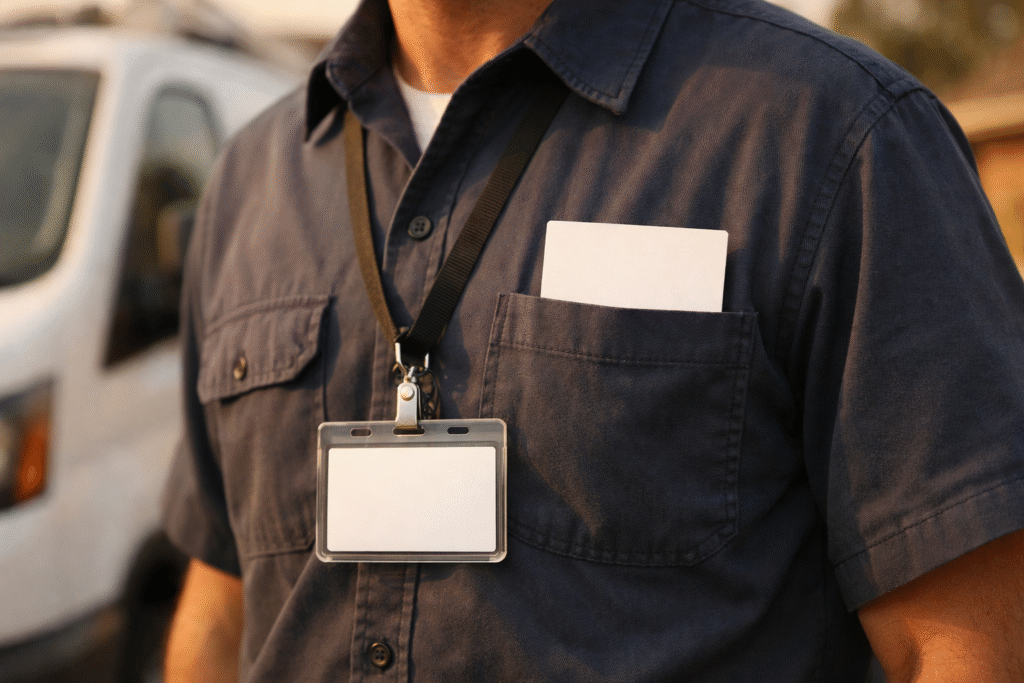
- The technician should have photo ID and should ask to see yours — proving you own the property.
- You should receive an itemized invoice, not a scribbled number on a piece of paper.
- Payment should be via card, with a receipt.
What to do if you think you’ve been scammed
- File a complaint with the FTC.
- File with the BBB.
- File a chargeback with your credit card company if you paid by card.
- Post a detailed, fact-based review with the business name on Google and Yelp so others can see it.
- If there was fraud or threatening behavior, file a police report.
The short version
A real locksmith: quotes flat rates, arrives in a marked vehicle, asks for your ID, picks locks before drilling, and sends a receipt by email. If any of those pieces are missing, you’re probably dealing with a scam.
At American Locksmith we quote flat rates on the phone, our techs arrive in marked vehicles with IDs, and we send itemized emailed receipts for every call. Call (888) 907-1705 for a real, upfront quote.
